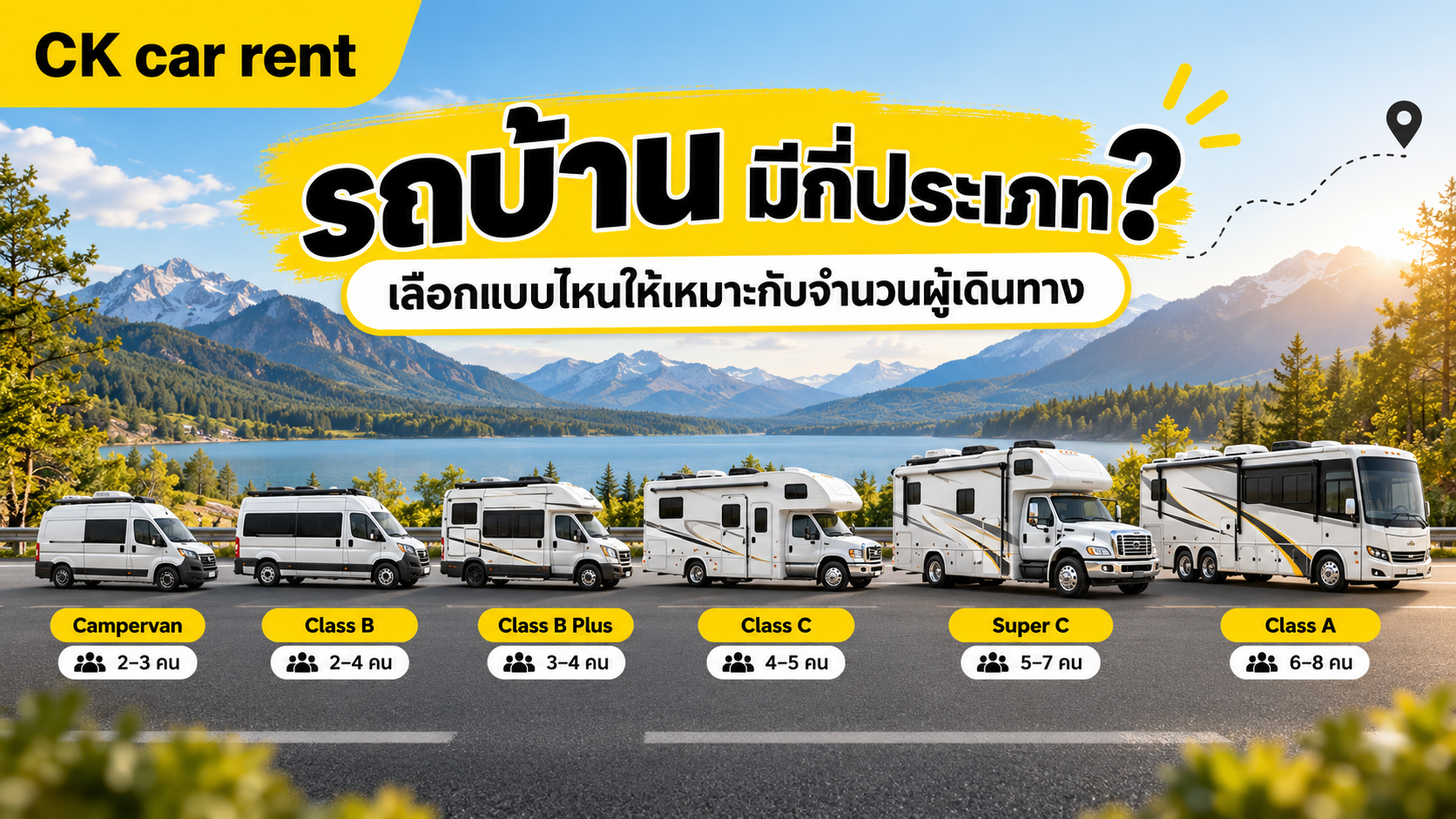




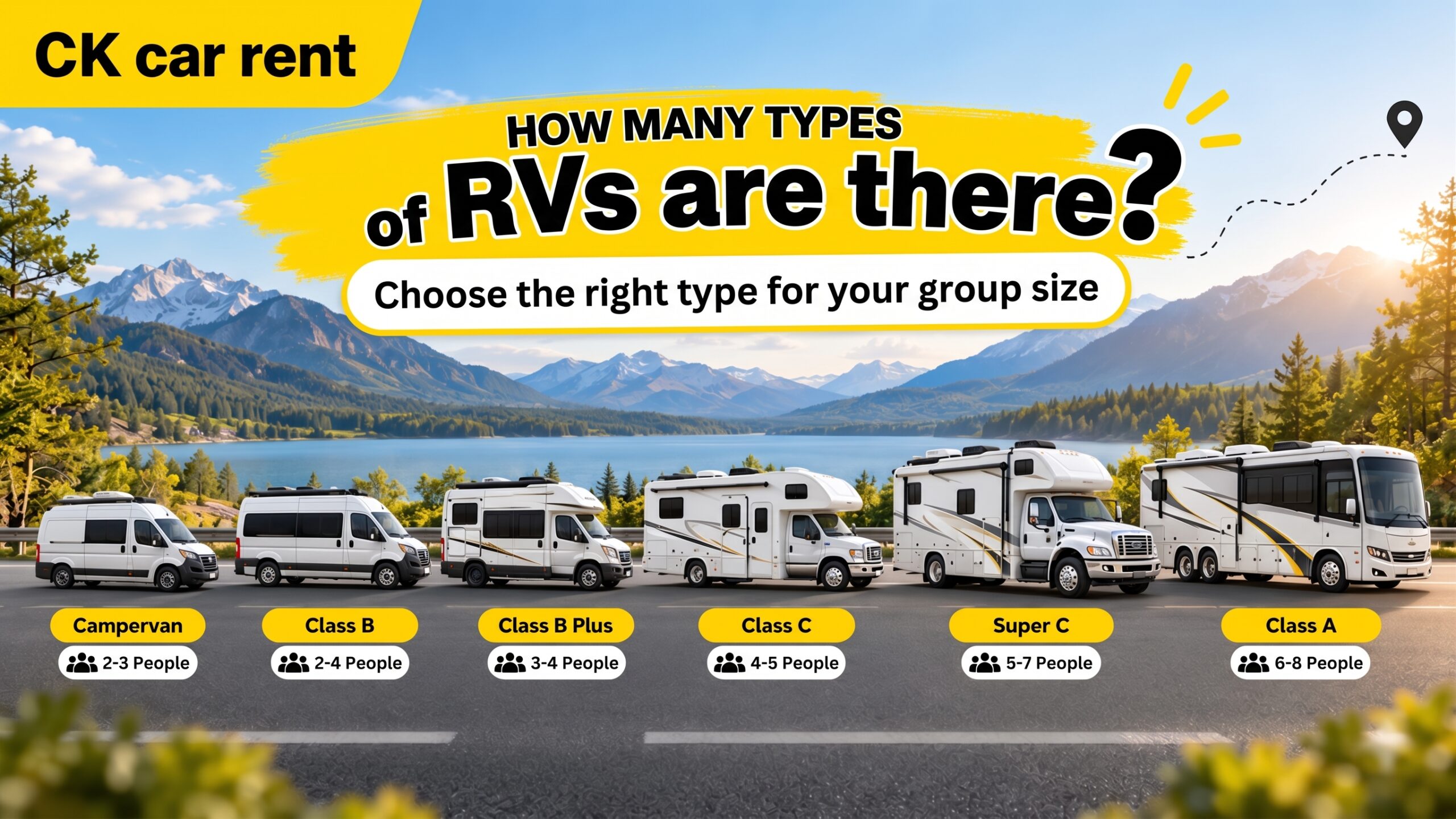
Road trips are becoming increasingly popular in Thailand, especially among travelers who value the freedom to choose their own routes, schedules, and places to stay. One of the first challenges beginners face when planning a trip is deciding which type of vehicle best suits their needs. As travelers move beyond conventional cars and explore the experience of living on the road, an important question arises: What are the different types of motorhomes, and how should you choose one for your next adventure?
Each type of motorhome has its own structure, living space, and amenities. Options range from compact converted vans that are easy to park to large recreational vehicles equipped with bathrooms, showers, and fully functional kitchen areas. Choosing a motorhome is not simply about its exterior appearance. You should also consider several important factors, including the number of travelers, the number of approved passenger seats, sleeping capacity, total budget, and the routes you intend to explore.
In this guide, we will introduce the major types of motorhomes, explain their advantages and limitations, and provide practical advice on choosing the right vehicle for your trip. Whether you want to immerse yourself in nature or enjoy a relaxing getaway to Khao Yai’s green-season cafés or explore the 40 attractions in Nonthaburi, understanding your transportation options will help you plan a more comfortable and safer journey.
What Is a Motorhome, and How Is It Different from a Campervan?
A motorhome is a vehicle designed or converted to combine transportation and living accommodation in one unit. Depending on the model, it may include essential facilities for everyday living, such as a bed, dining area, compact kitchen, and, in many cases, an integrated bathroom and shower. Motorhomes are often built on a truck or commercial vehicle chassis, providing more interior space than a conventional passenger vehicle.
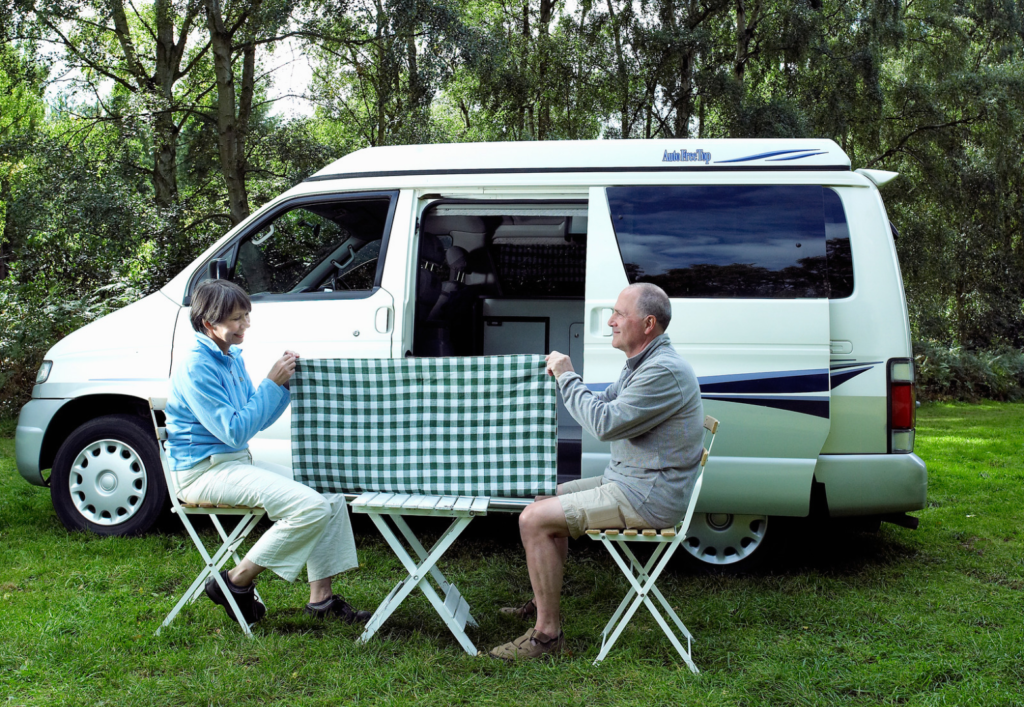
A campervan is generally a van that has been converted into a compact living space. The rear section is adapted for sleeping, storage, and sometimes cooking. Campervans are typically smaller than conventional motorhomes and offer greater maneuverability. However, they may not have an onboard bathroom or shower, and those that do often have limited facilities. Their interiors usually feature multifunctional furniture, such as a dining table that converts into a bed.
The main difference between a motorhome, campervan, travel trailer, and conventional car lies in their level of self-contained living capability.
Conventional cars are primarily designed for passenger transportation, whereas motorhomes provide facilities that support overnight stays and everyday activities. However, amenities vary considerably by manufacturer, model, and rental provider. Some vehicles have solar panels and air-conditioning systems that can operate without the engine running, while others may offer little more than a bed and ventilation fan.
Before booking, always check the actual equipment included in the specific vehicle you intend to rent.
What Are the Different Types of Motorhomes? 7 Types to Know Before You Choose
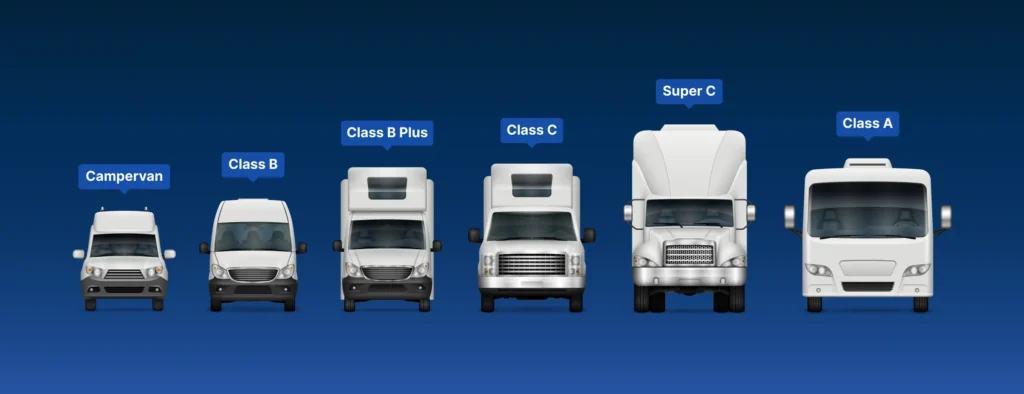
There is no single universally accepted number of motorhome categories. Vehicles can be classified according to their construction, propulsion systems, or intended use. In the international recreational vehicle (RV) industry, however, motorhomes and recreational vehicles are commonly divided into several main categories.
1. Class A Motorhome
A Class A motorhome is one of the largest types of recreational vehicles. It is generally built on a heavy-duty chassis designed for large vehicles, with some models using bus-style platforms. Its distinctive appearance often includes a flat front and a large windshield.
General characteristics
- Spacious interior with a layout resembling a small apartment.
- Separate sleeping areas in many models.
- Large kitchen and dining areas.
- Integrated bathroom and shower facilities in many configurations.
- Generous exterior storage compartments for luggage and equipment.
Advantages
The main advantage of a Class A motorhome is its extensive living space. It can provide a comfortable environment for long journeys, especially for travelers who want separate areas for sleeping, cooking, relaxing, and storing belongings.
Limitations
Class A motorhomes can be difficult to maneuver, particularly on narrow roads or in crowded urban areas. Finding suitable parking spaces and campsites can also be challenging. Fuel consumption and rental costs are generally higher than those of smaller recreational vehicles.
Best suited for
These vehicles are best suited to major highways, wide roads, and established campsites that can accommodate large RVs. They are less suitable for narrow mountain roads and tight urban streets.
Potential sleeping capacity: 2–6 people, depending on the model.
What to check before renting
Confirm the required driving licence category, vehicle dimensions, overall height, and any restrictions that apply to the roads you plan to use. Licence requirements depend on the vehicle’s registered classification, weight, and local regulations.
2. Class B Motorhome or Campervan
A Class B motorhome is typically converted from a standard van while retaining much of the original vehicle body. It is commonly known as a campervan.
General characteristics
- Compact exterior dimensions.
- A van-like appearance that is relatively familiar to most drivers.
- A high-roof configuration or pop-top roof in some models.
- Multifunctional interior furniture designed to maximize limited space.
Advantages
Class B vehicles are generally easier to drive and park than larger motorhomes. Their compact dimensions make them suitable for road trips involving towns, cities, cafés, and smaller tourist destinations. They also tend to consume less fuel than larger recreational vehicles, although actual fuel economy depends on the vehicle and driving conditions.
Limitations
Living space is limited, so travelers must organize their belongings carefully. Some models require the dining area to be converted into a bed each night. Bathroom facilities may be unavailable or very compact, and storage space can be insufficient for bulky luggage.
Best suited for
Campervans are ideal for couples, solo travelers, and people who prioritize mobility over extensive onboard amenities.
Potential sleeping capacity: 1–2 people, or 3–4 in some models with additional sleeping arrangements, such as a pop-top roof.
What to check before renting
Confirm whether the vehicle has a toilet, shower, cooking facilities, and sufficient storage. If there is no onboard bathroom, plan stops at suitable petrol stations, campsites, or other facilities along your route.
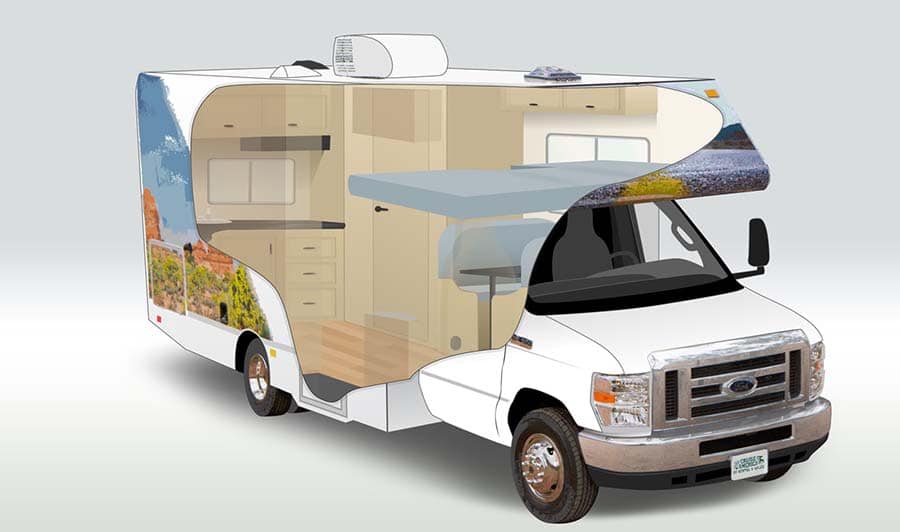
3. Class C Motorhome
Class C motorhomes are popular in many international RV rental markets because they offer a balance between living space and maneuverability. They are commonly built on a van or truck chassis with a purpose-built living compartment behind the driver’s cab.
One of their most recognizable features is the cab-over section, which extends above the driver’s cab and often provides an additional sleeping area.
General characteristics
- A living compartment separate from the driver’s cab.
- An overhead sleeping area in many models.
- A rear bedroom or additional sleeping arrangement, depending on the layout.
- Kitchen facilities and, in many models, an integrated bathroom and shower.
Advantages
Class C motorhomes offer a practical balance between size and comfort. The overhead bed makes efficient use of space, while the main living area can accommodate dining, cooking, and relaxing. Some layouts allow travelers to keep their beds ready without converting the dining table every night.
Limitations
Their larger profile creates more wind resistance than that of a standard van, potentially increasing fuel consumption. Drivers must also pay attention to vehicle height, width, turning radius, and rear overhang when navigating bends or uneven roads.
Best suited for
Class C motorhomes are suitable for family road trips, visits to established national park campsites, and journeys along major tourist routes.
Potential sleeping capacity: 4–6 people, depending on the layout.
What to check before renting
Inspect the size and arrangement of each bed, the number of approved passenger seats, and the capacity of the freshwater and wastewater tanks. These factors can significantly affect comfort during longer journeys.
4. Truck Camper
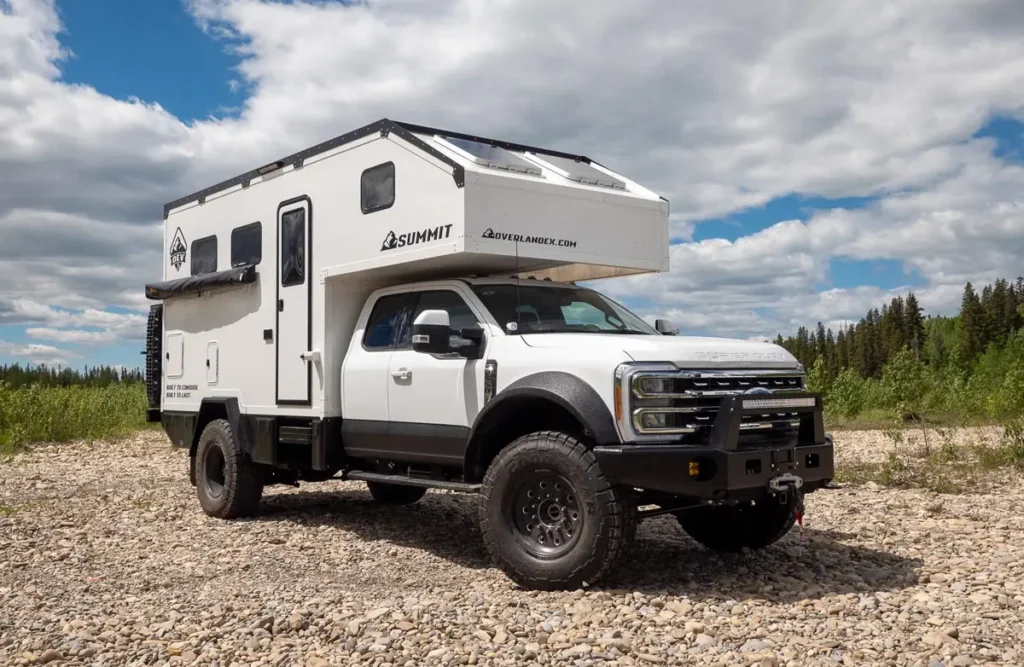
A truck camper consists of a detachable or separately installed living module mounted on the bed of a pickup truck. Unlike a conventional motorhome, the accommodation module is not necessarily permanently integrated into the vehicle.
General characteristics
- A living compartment mounted on a pickup truck.
- A compact sleeping area.
- Optional cooking, water, and bathroom facilities.
- Some designs can be removed from the pickup when not in use, depending on the installation system.
Advantages
Truck campers can be useful for travelers who want to explore remote destinations accessible to a suitable pickup truck. When paired with an appropriately equipped four-wheel-drive vehicle, they may be suitable for certain off-grid adventures and rugged terrain.
Limitations
Interior space is generally limited. Entry is often through the rear or a designated access point, and headroom may be restricted. The added weight can affect handling, braking, stability, and overall vehicle performance.
Best suited for
Adventure travelers who want to explore remote natural areas and places where a conventional large motorhome may be impractical.
Potential sleeping capacity: 2–3 people, depending on the design.
What to check before renting
Verify the pickup truck’s payload capacity and ensure that the combined weight of the camper, passengers, luggage, water, and equipment remains within the vehicle manufacturer’s limits. Check that the installation and load distribution comply with applicable safety requirements.
5. Travel Trailer
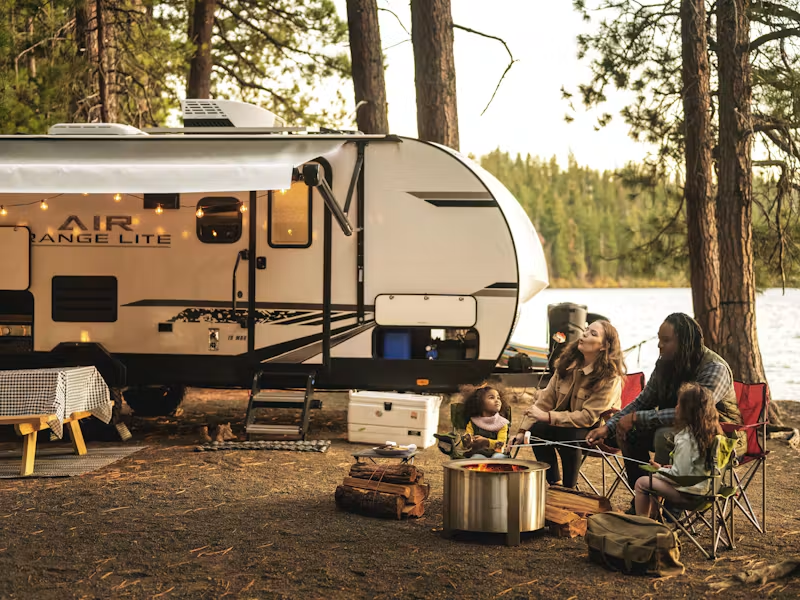
A travel trailer, also known as a caravan in many European markets, is a towable recreational vehicle without its own engine. It must be pulled by a compatible vehicle, such as a pickup truck or SUV.
General characteristics
- A separate living unit mounted on wheels.
- Available in various sizes, from compact teardrop trailers to large caravans.
- May include beds, a kitchenette, storage, and bathroom facilities, depending on the model.
Advantages
Travel trailers can provide substantial living space without requiring a separate motorhome powertrain. One of their greatest benefits is the ability to leave the trailer at a suitable campsite and use the towing vehicle independently for local sightseeing or shopping.
Limitations
Towing requires additional driving skills. Reversing, turning, and judging the combined vehicle length can be challenging, particularly for inexperienced drivers. Towing also affects acceleration, braking, fuel consumption, and maneuverability.
Passengers should not travel inside a trailer while it is being towed unless the specific arrangement is expressly permitted by applicable law and safety regulations. In many jurisdictions, riding in a towed trailer is prohibited and unsafe.
Best suited for
Travelers who prefer to establish a base at one campsite for an extended period rather than move between destinations frequently.
Potential sleeping capacity: 2–8 people, depending on the trailer’s size and layout.
What to check before renting
Confirm the towing vehicle’s rated towing capacity, hitch compatibility, trailer weight, load distribution, and braking requirements. Check local regulations governing trailer registration, towing, and passenger safety.
6. Fifth-Wheel Trailer
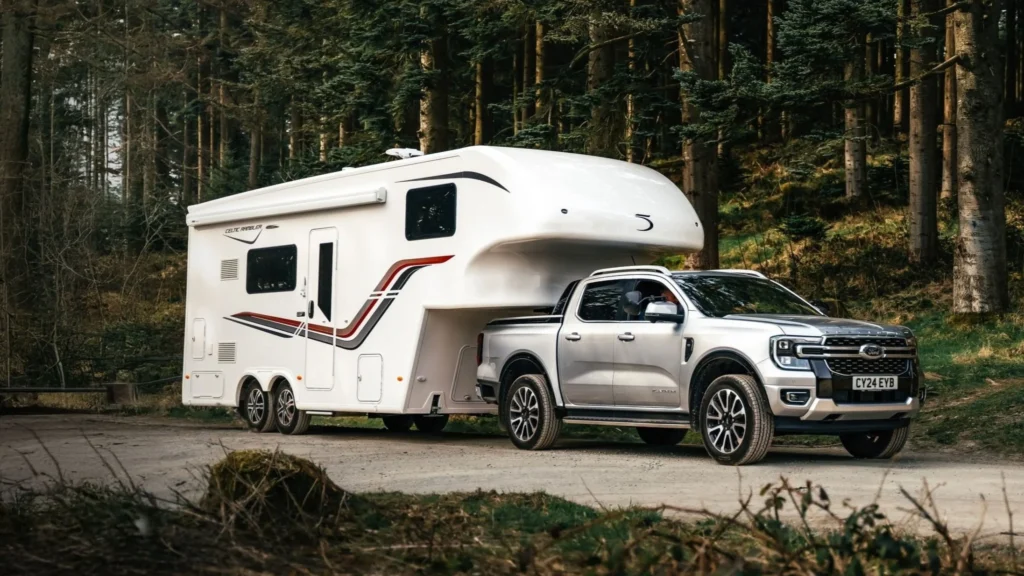
A fifth-wheel is a type of towable recreational vehicle that uses a different hitch arrangement from a conventional travel trailer.
General characteristics
- An extended front section designed to connect to a fifth-wheel hitch mounted in the bed of a suitable pickup truck.
- A spacious interior, often with a raised front living or sleeping area.
- Some models feature slide-outs that extend the living space when parked.
Advantages
Fifth-wheel trailers can provide extensive living space and a stable towing arrangement when properly matched to the towing vehicle. Their hitch position above or near the rear axle of the pickup can improve towing stability compared with some conventional trailer configurations.
Limitations
These trailers require a compatible pickup truck with sufficient towing and payload capacity. Their size can make them difficult to maneuver in confined spaces, and they require large parking areas and suitable campsites.
Best suited for
Families or groups seeking spacious accommodation for longer stays at established campsites.
Potential sleeping capacity: 4–8 people, depending on the model.
What to check before renting
Confirm the pickup truck’s towing and payload ratings, hitch compatibility, combined vehicle dimensions, and clearance requirements. A heavy-duty pickup may be necessary, depending on the trailer.
7. Camping Vehicles and DIY Camper Conversions
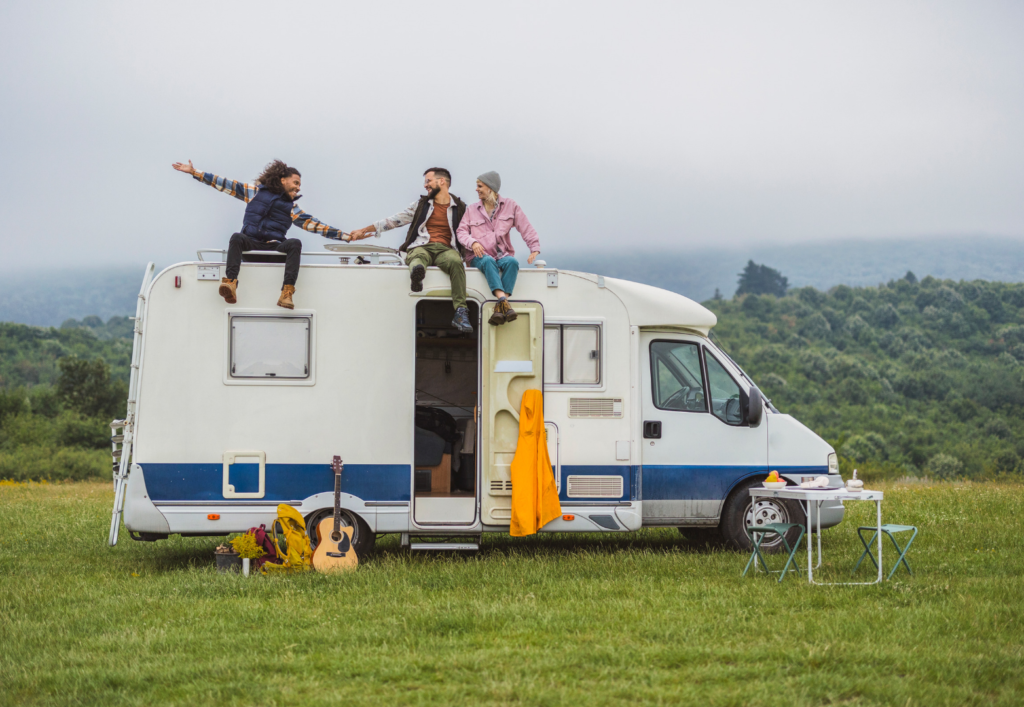
This category includes SUVs, pickup trucks fitted with camper shells, and vans that have been adapted for occasional overnight stays. Owners may fold down the rear seats, install a sleeping platform, or add storage boxes and basic camping equipment.
General characteristics
- Exterior appearance similar to a conventional vehicle.
- A basic sleeping area created by folding seats or installing a platform.
- Limited onboard amenities.
- Equipment and storage arrangements vary considerably.
Advantages
These vehicles are often more affordable than fully equipped motorhomes and can be easier to drive and park. They may also remain practical for everyday use when the camping equipment is removable.
Limitations
Most DIY camping vehicles do not have integrated bathrooms or full kitchens. Ventilation, electrical systems, temperature control, and sleeping comfort may also be limited compared with purpose-built recreational vehicles.
Best suited for
Short trips, minimalist camping, overnight stays before an early morning activity, or travelers who prefer simple accommodation arrangements.
Potential sleeping capacity: 1–2 people, depending on the vehicle.
What to check before renting or converting
Ensure adequate ventilation, safe electrical arrangements, secure storage, and reliable vehicle locks. Never operate a fuel-burning cooking appliance inside an enclosed vehicle. Also, confirm that overnight parking is permitted at your chosen location and that suitable bathroom facilities are available.
How to Choose a Motorhome Based on the Number of Travelers
Choosing a motorhome requires more than checking how many people can sleep inside. You must also consider how many people can travel safely in the vehicle and whether there is enough room for everyone to live comfortably.
Motorhomes for 1–2 People
For solo travelers and couples, a Class B motorhome or compact campervan is often a practical choice. Its smaller dimensions make driving, parking, and moving between destinations easier. It can also help keep fuel and rental costs manageable.
Although the sleeping area may be compact, it can be sufficient for two people who prioritize mobility and outdoor activities. If having a private bathroom is essential, consider a larger campervan or a compact Class C motorhome equipped with the necessary facilities.
Motorhomes for 3–4 People
When traveling with three or four people, sleeping arrangements and luggage storage become increasingly important.
A Class C motorhome is often worth considering because many models have an overhead bed and an additional rear sleeping area. This arrangement may allow everyone to sleep without converting the dining table every evening.
A practical layout should provide enough room for passengers to sit comfortably during travel, prepare meals, and store luggage without blocking access to essential facilities.
Motorhomes for 5–6 People
For groups of five or six, the most important consideration is the number of approved passenger seats equipped with appropriate seat belts.
A vehicle that sleeps six people does not automatically have six legal and safe passenger seats. Some recreational vehicles offer several sleeping spaces but have seat belts for only four occupants.
For larger groups, a suitably configured Class A or Class C motorhome may provide the necessary space. However, the actual passenger seating capacity must be verified before booking. You should also check luggage capacity, bathroom facilities, and the amount of shared living space available.
Motorhomes for Families with Children
Traveling with young children introduces additional safety and comfort considerations.
Class C motorhomes can be attractive to families because the overhead sleeping area provides a separate place for children to sleep. However, sleeping arrangements should never take priority over passenger safety.
Before booking, confirm that the vehicle has appropriate seat belts and that child safety seats can be installed correctly in the designated travel seats. Do not assume that a seat in the dining area is suitable for a child safety seat simply because it has a seat belt.
Check the vehicle manufacturer’s instructions and the child seat’s compatibility requirements, including whether an appropriate three-point belt or approved child-seat anchorage system is available.
An onboard bathroom can also be particularly useful when traveling with young children, especially at night.
Motorhomes for Groups of Friends
When traveling with friends, consider ease of access, luggage storage, shared living space, and bathroom arrangements.
Water tanks and wastewater storage have limited capacities. If several people shower consecutively, the freshwater supply may run low or the wastewater tank may fill quickly.
For groups, it is helpful to plan overnight stays at campsites with shared bathroom facilities or choose a motorhome with adequate water capacity. Before the trip, agree on how rental costs, fuel, campsite fees, tolls, and other expenses will be divided.
Comparison Table: Different Types of Motorhomes
The following table summarizes the key characteristics of each recreational vehicle type to help you compare the options more easily.
| Motorhome Type | Main Features | Typical Living Space | Maneuverability | Potential Sleeping Capacity | Key Considerations |
|---|---|---|---|---|---|
| Class A | Large motorhome built on a heavy-duty chassis | Very spacious, often with extensive amenities | Low; difficult to maneuver and park | 2–6 people | High fuel consumption, vehicle height, and licence requirements |
| Class B (Campervan) | Van converted into a compact living space | Limited space; bathroom may be unavailable | High; relatively easy to drive and park | 1–2 people | Limited storage and multifunctional furniture |
| Class C | Living compartment with an overhead cab section | Balanced layout with sleeping, kitchen, and often bathroom facilities | Moderate; height and rear overhang require attention | 4–6 people | Fuel consumption, wind resistance, and vehicle dimensions |
| Truck Camper | Living module mounted on a pickup truck | Compact with limited interior space | Depends on the pickup and camper configuration | 2–3 people | Payload capacity and vehicle stability |
| Travel Trailer | Towable accommodation without its own engine | Varies from compact to spacious | Low while towing; reversing can be difficult | 2–8 people | Towing capacity, hitch compatibility, and trailer brakes |
| Fifth-Wheel | Large trailer connected to a hitch in a pickup truck bed | Spacious, often with an elevated front section | Low; requires substantial turning and parking space | 4–8 people | Heavy-duty towing requirements and overall dimensions |
How to Use This Table to Choose a Motorhome
- Determine the number of travelers. Consider both sleeping capacity and approved passenger seating.
- Assess your driving experience. If you are unfamiliar with large vehicles or towing, consider a smaller campervan before choosing a Class A motorhome or trailer.
- Match the vehicle to your needs. Decide which facilities are essential and identify rental providers offering suitable models.
- Verify the exact vehicle specifications. This table provides general guidance only. Actual layouts, amenities, and passenger capacities vary by model, so confirm the details with the rental provider before booking.
How to Choose a Motorhome Based on Budget and Travel Style
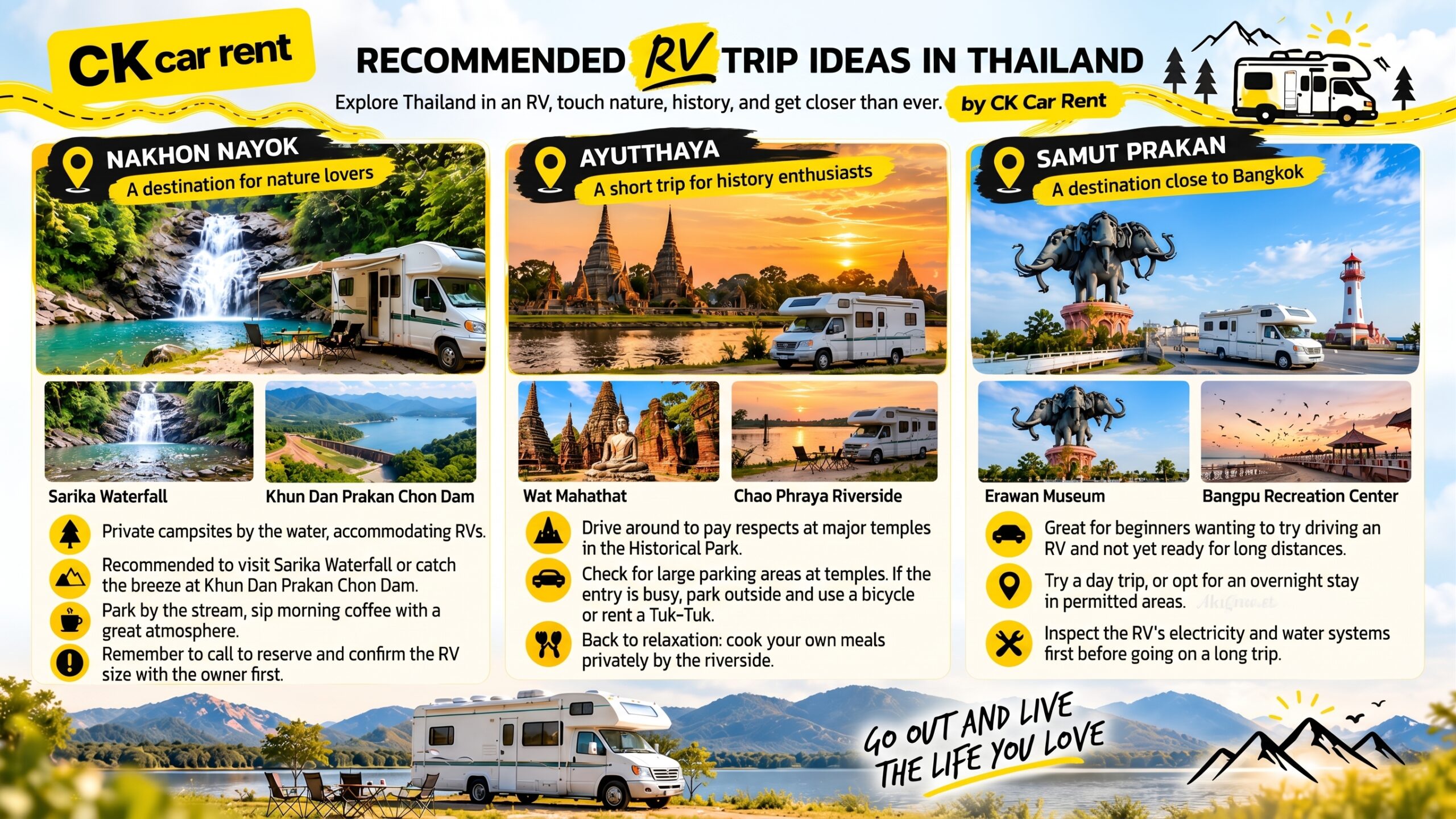
Renting a motorhome involves several expenses beyond the daily rental rate. Understanding the total cost and matching the vehicle to your travel style can help you avoid unnecessary expenses.
Choose According to Your Budget
Your total motorhome travel budget should include the following expenses.
- Rental fees: Prices vary according to vehicle size, category, rental duration, and travel season. Compact campervans may cost less to rent than large Class A motorhomes, although prices depend on the specific vehicle and provider.
- Insurance and security deposits: Rental providers may require a security deposit and offer different levels of damage protection. Review the coverage, excess, exclusions, and deposit conditions carefully.
- Fuel costs: Larger and heavier vehicles generally require more fuel, although actual consumption depends on the model, terrain, and driving style.
- Campsite fees: Overnight parking or campsite facilities may involve additional charges.
- Food and supplies: Cooking onboard can help manage meal expenses, but you may need to purchase ingredients, drinking water, and other supplies.
- Tolls and parking: Include road tolls and parking charges in your calculations.
- Additional equipment: Bedding, camping chairs, cooking equipment, or other accessories may incur extra fees.
Compare the full trip cost rather than choosing a vehicle based on its daily rental rate alone.
Choose According to Trip Duration
Short trips of 1–2 days
A campervan or compact camping vehicle can be a suitable choice for short getaways. These vehicles are practical when you plan to spend most of your time outdoors and do not require extensive onboard facilities.
Three days and two nights
A Class C motorhome may be worth considering if you want a dedicated sleeping area, cooking facilities, and a private bathroom. However, a campervan can also work well if you are comfortable using campsite facilities.
Long road trips
For journeys lasting several days or longer, consider a vehicle with comfortable beds, sufficient storage, suitable kitchen facilities, and an adequate water supply.
A Class C motorhome can provide a good balance between comfort and maneuverability. If your budget allows and your route can accommodate a larger vehicle, a Class A motorhome may offer additional living space.
Choose According to Your Route
Cities and major highways
Smaller campervans are generally easier to maneuver through urban areas. Larger motorhomes may also be suitable if the roads, parking facilities, and accommodation sites can accommodate their dimensions.
Mountain roads, winding routes, and narrow streets
Consider a compact campervan or a suitably equipped truck camper. Large motorhomes and trailers can be more difficult to maneuver on narrow or winding roads. Always check road conditions, gradients, turning space, and vehicle restrictions before departure.
Locations with height restrictions
Many motorhomes exceed the height limits of standard parking garages and some roadside facilities. Check the vehicle’s actual height and any relevant width or weight restrictions before entering a parking area, tunnel, or restricted road.
Choose According to Your Travel Style
Multi-stop road trips
If your itinerary includes frequent stops at cafés, restaurants, viewpoints, and tourist attractions, a campervan or compact motorhome may be more practical because it is easier to maneuver and park.
Camping and slow travel
If you prefer staying at one campsite for several nights, relaxing outdoors, cooking, and enjoying nature, a travel trailer may be a good option. You can leave the trailer at an appropriate campsite and use the towing vehicle for local excursions, provided the campsite permits this arrangement.
A motorhome can also suit slow travel, especially if you want to move between destinations while keeping your accommodation with you.
Motorhome vs. Conventional Rental Car: Which Offers Better Value for Your Trip?
Travelers often wonder whether renting a motorhome can save money compared with renting a conventional car and booking hotels. The answer depends on your itinerary, group size, accommodation preferences, and travel habits.
A motorhome is not always the more economical option. Consider the following differences before making your decision.
Choose a Trusted Motorhome Rental Company
Choose a reliable rental company with clear vehicle details and rental terms. Compare options such as MIDO Car Rental and Mind Voyage, considering vehicle types, rental rates, deposits, and insurance coverage before booking.
Luggage and Storage
Motorhomes may provide dedicated storage compartments, but part of the available space may be occupied by camping equipment, cooking supplies, and bedding.
Conventional rental cars offer a simpler arrangement for travelers who primarily need space for suitcases and day-trip essentials.
Overnight Convenience
Motorhomes allow you to keep your accommodation with you, reducing the need to check in and out of different hotels. Depending on the location and applicable rules, you may be able to wake up close to nature and enjoy a more flexible itinerary.
However, motorhome users may need to manage water supplies, wastewater, electrical systems, and campsite arrangements themselves.
Which Option Should You Choose?
If your trip focuses on urban attractions, restaurants, cafés, shopping, and comfortable hotel stays, a conventional rental car may offer better convenience and value.
For travelers who want to enjoy camping, spend more time outdoors, and experience life on the road, a motorhome can provide a memorable alternative.
If a conventional rental car better suits your plans, you can explore the available vehicle options at CK Car Rental.
The best choice ultimately depends on the experience you want, the route you plan to follow, and the total budget you are prepared to spend.
Frequently Asked Questions About Motorhomes
1. How many types of motorhomes are there?
There is no single universal classification. Three common motorhome categories are Class A, Class B, and Class C. Other recreational vehicle types include truck campers, travel trailers, fifth-wheel trailers, and converted camping vehicles.
2. What is the difference between a motorhome and a campervan?
A campervan is generally a compact van converted into a living space and is commonly associated with Class B motorhomes. Larger motorhomes may offer more extensive facilities, such as separate kitchen and bathroom areas. However, the actual differences depend on the model and its equipment.
3. Which motorhome is best for two people?
A Class B motorhome or campervan is often suitable for two people because it is compact, relatively easy to drive, and convenient for moving between destinations. If you need a private bathroom or additional living space, consider a larger model.
4. What should a family of four consider when choosing a motorhome?
A Class C motorhome may be a suitable option because many models provide an overhead sleeping area and a separate rear bed. However, you should confirm the approved passenger seating capacity, seat-belt arrangements, child-seat compatibility, luggage space, and onboard facilities before booking.
5. How many people can sleep in one motorhome?
Sleeping capacity depends on the vehicle’s design and layout. Many campervans accommodate approximately 1–2 people, while some Class C motorhomes sleep 4–6. Larger motorhomes and trailers may accommodate 6–8 people. Always check the manufacturer’s specifications for the exact model.
6. Do all motorhomes have bathrooms?
No. Many large Class A and Class C motorhomes have integrated bathrooms, but facilities vary. Some campervans and compact camping vehicles have no onboard toilet or shower, while others may include a portable toilet or compact bathroom.
7. What is the difference between a motorhome and a travel trailer?
A motorhome has its own engine and can be driven independently. A travel trailer has no engine and must be towed by a compatible vehicle. Passenger travel inside a moving trailer is generally prohibited in many jurisdictions, so check the applicable local laws and safety requirements.
8. Are motorhomes suitable for road trips in Thailand?
Motorhomes can be suitable for trips to designated campsites, national park camping areas where permitted, and suitable destinations outside major urban areas. However, travelers should plan around narrow roads, parking restrictions, vehicle height, water refilling, and wastewater disposal facilities.
Before departing, confirm that overnight stays and vehicle access are permitted at each destination.
9. What should first-time motorhome renters prepare?
Prepare the appropriate driving licence, required identification documents, and a payment method for the security deposit. Plan your route, check overnight parking arrangements, and learn how to operate the vehicle’s water, electrical, and waste systems.
You should also understand the rental agreement, insurance coverage, excess charges, mileage limits, breakdown procedures, and rules for returning the vehicle.
10. Is a motorhome or a conventional rental car better for a road trip?
A motorhome may be ideal if you want a camping-focused experience, flexible overnight arrangements, and closer contact with nature. A conventional rental car is often more practical for trips involving multiple city attractions, restaurants, cafés, and hotel stays.
Compare the total budget, itinerary, parking requirements, and comfort preferences before deciding.
Conclusion: How to Choose the Right Motorhome for Your Road Trip
Choosing the right motorhome is essential for a comfortable, safe, and enjoyable road trip. Use these key considerations to guide your decision.
- Consider the number of travelers. Prioritize the number of approved passenger seats with appropriate seat belts, followed by sleeping capacity and living space.
- Calculate your total budget. Include rental fees, fuel, tolls, insurance, security deposits, campsite charges, and other travel expenses.
- Evaluate your route and trip duration. Compact vehicles may be easier to handle on narrow roads, while larger motorhomes can provide more comfort on suitable routes.
- Identify essential facilities. Decide whether you need an onboard bathroom, shower, kitchen, or additional water and electrical capacity.
- Assess your driving experience. Choose a vehicle that you can safely operate and park, taking its height, width, weight, and turning radius into account.
- Check local rules and parking arrangements. Confirm road restrictions, permitted overnight locations, and facilities for water refilling and wastewater disposal.
If you are planning a trip that involves sightseeing in cities, visiting cafés, exploring local attractions, or traveling with a focus on convenience, a conventional rental car may be the more practical choice.
You can explore a range of rental car options and services at CK Car Rental, which offers different vehicle categories for a variety of travel needs.
Contact CK Car Rental :
- Telephone: 02-161-4119
- Email: info@ckcarrent.com
- LINE ID: @ckcarrent
- Facebook: CK Car Rent
- WhatsApp: +66 93 138 3531
- Office address: 489 Nonthaburi Road, Tha Sai, Mueang Nonthaburi, Nonthaburi 11000, Thailand
- Google Maps: View the office location
- Plan your next road trip with the right vehicle, a realistic budget, and a route that matches your travel style.